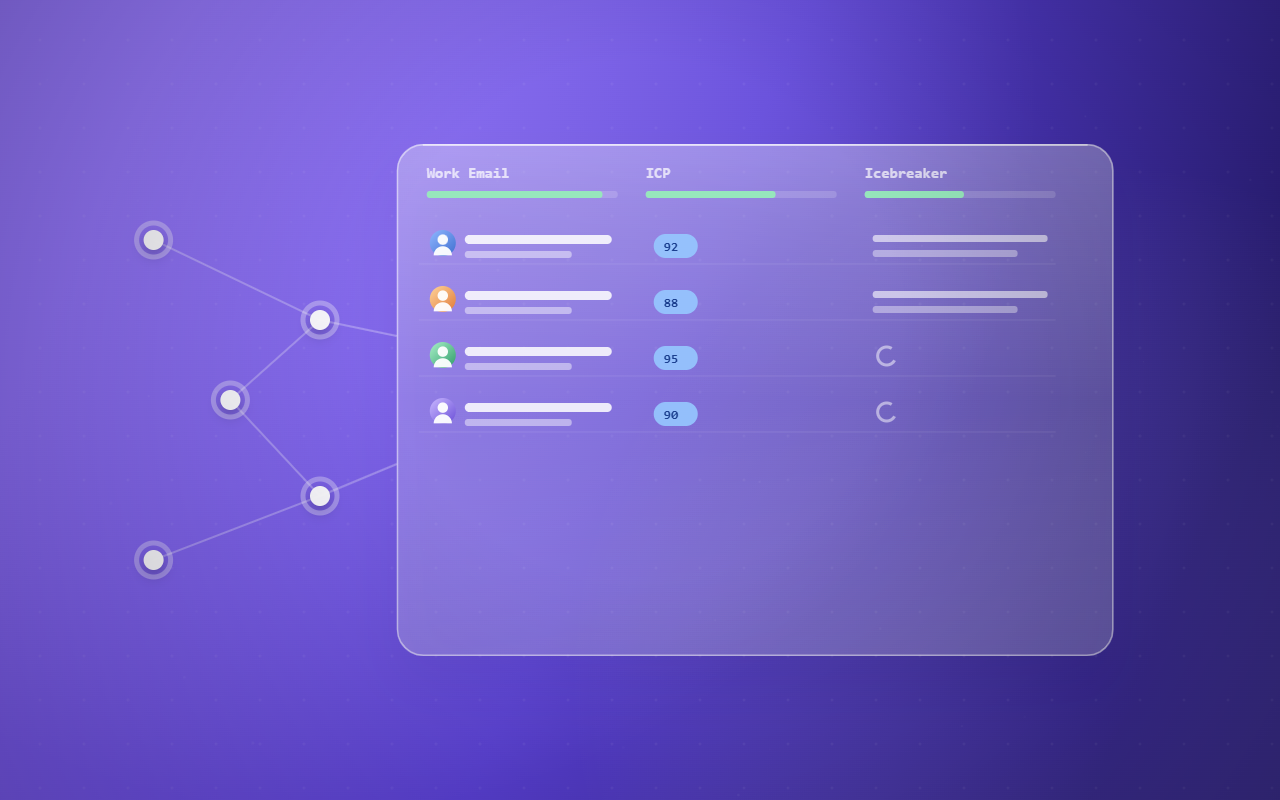
How to build a B2B SaaS prospecting list that actually converts
Read
To build an HR tech prospecting list that converts: (1) define the ICP by HR category and headcount band, (2) layer in hiring and growth signals (hiring surges, new offices, new People leaders), (3) reach the People and Talent buying committee, (4) enrich from multiple sources, (5) verify before sending, and (6) prioritize and personalize. In HR tech, headcount growth is the single strongest buying signal — target it.
HR tech has the cleanest buying signal in all of B2B: a company growing its headcount. When a business is hiring fast, opening offices, or onboarding in waves, its existing HR, payroll and talent tools start to crack, on cue. The trick to an HR tech prospecting list isn't finding "companies with an HR department" (that's all of them); it's finding the ones whose growth is about to outrun their stack, and reaching the People leader who feels that pain first.
Here's the six-step process we use to build HR tech prospecting lists, the same one behind our done-for-you B2B leads for HR tech. Run it yourself or hand it off, the output should look the same: small, verified, growth-signaled, and prioritized.
Start by naming exactly who you serve. For HR tech the attributes that matter most are:
This is the same discipline behind why ICP-first beats volume, just with headcount doing more of the work than in most categories.
Firmographics tell you who could buy. Growth signals tell you who's feeling the strain right now. The highest-value HR tech timing signals are:
"You're hiring 30 people this quarter" is the warmest opener in HR tech, because it's true, specific, and the buyer is already living it.
HR tech decisions usually run through a People-side committee: the CHRO or VP of People owns the call, with Talent, HR Ops and sometimes IT or finance involved depending on the product. Don't scrape every contact, validate role and seniority so you reach the People, Talent and HR Ops decision-makers, not a generic distribution list. A few right contacts beat twenty wrong ones and keep the list small enough to verify and personalize.
Now build the contact data. One database gives you a start but caps coverage at a single provider's freshness, a problem when People titles vary widely (Head of People, CHRO, VP Talent all mean similar things). Use a waterfall:
The honest take: a raw database export is a starting point, not a list. The accounts that convert are the ones you matched on growth, enriched from multiple sources, and verified, which is why exports alone aren't enough.
People leaders are busy and protective of their inbox, so deliverability has to be clean. Verify every address before it reaches a sequencer, we double-verify, which is how we hold bounce under 1%. One bad batch into a list of CHROs doesn't just bounce, it wastes the warmest growth signals you worked to find.
Finally, score the list by ICP fit and signal strength so reps work the fastest-growing accounts first, and attach a one-line angle to each, the hiring surge, the new office, the People leader who just started. In HR tech, that growth context is exactly what turns a cold email into a timely one.
Build it in this order and the list almost can't be bad: a category-and-headcount ICP, real hiring and growth signals, the right People committee, multi-source enrichment, verification, and prioritization. Skip steps and you're emailing every company with an HR team, which is to say, no one in particular. In HR tech, the edge was never a bigger list, it's catching companies at the moment their growth outruns their stack.
Want this done for you each month? See our B2B leads for HR tech service, or book a 30-minute call, or grab free double-verified sample lists by industry right now.