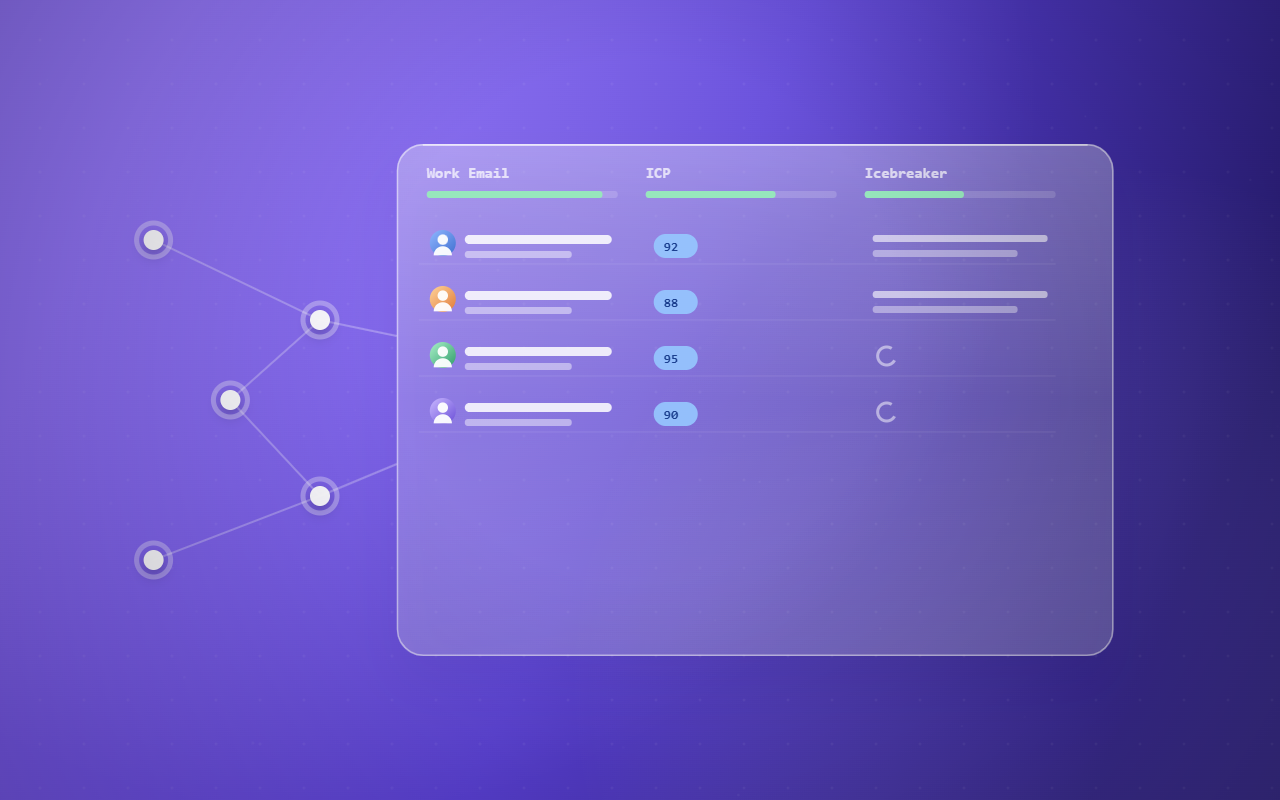
Why ICP-first beats volume every time in cold outbound
Read
To build a B2B SaaS prospecting list that converts: (1) define a tight ICP, (2) layer in buying signals like funding and hiring, (3) target the real decision-makers, (4) enrich contacts from multiple sources, (5) verify before sending, and (6) prioritize and personalize. A focused, signal-driven list of 500 beats a random export of 10,000 every time.
Most SaaS teams build a prospecting list backwards. They pick a tool, pull the biggest export the filters allow, and start sending. The list is technically huge and practically useless, because reach was never the bottleneck. Fit, timing and deliverability are. A focused list of 500 accounts that match your ICP and show a buying signal will out-convert 10,000 random companies every time.
Here's the six-step process we use to build SaaS prospecting lists, the same one behind our done-for-you B2B leads for SaaS. Whether you run it yourself or hand it off, the output should look the same: small, verified, and signal-prioritized.
Your ICP is the set of attributes shared by accounts that buy and stay. For SaaS, the ones that matter most are usually:
If this feels familiar, it should, it's the core of why we argue ICP-first beats volume. Write the ICP down as explicit criteria before you open a database, or the tool's filters will quietly define your strategy for you.
A firmographic list tells you who could buy. Signals tell you who's likely buying now. For SaaS, the highest-value timing signals are:
Firmographics get you a list. Signals get you a reason to reach out this week, and a first line that doesn't sound like a blast.
Once you have the accounts, resist the urge to scrape every email at the company. Decide which personas actually own the problem you solve, by department and seniority, and target those. For a developer tool that's an engineering lead; for a revenue product it's a RevOps or sales leader. Two right contacts beat twenty wrong ones, and they keep your list small enough to verify and personalize properly.
Now you build the contact data. A single database gives you a starting point but caps your coverage at one provider's freshness. The fix is a waterfall: pull reach from a database, then enrich across several email and phone providers so a missing contact at one source gets filled by another.
The honest take: a raw database export is a starting point, not a list. The accounts that convert are the ones where you enriched from multiple sources and confirmed the contact is real, which is exactly why exports alone aren't enough.
This is the step most teams skip and most regret. Even good data decays, and one bad batch can tank your domain reputation for weeks. Run every address through verification before it reaches a sequencer. We double-verify, which is how we hold bounce under 1% on lists we deliver. If you only adopt one step from this list, make it this one.
Finally, score the list. Rank accounts by ICP fit and signal strength so your reps work the hottest prospects first, and attach a one-line personalization angle to each, the funding round, the new hire, the stack change you found in Step 2. A verified list with a reason to reach out is the entire game.
Build it in this order and the list almost can't be bad: a tight ICP, real buying signals, the right personas, multi-source enrichment, verification, and prioritization. Skip steps and you're back to spraying a giant export and hoping. The work isn't finding more companies, it's finding the right ones and proving you can reach them.
Want this done for you each month? See our B2B leads for SaaS service, or book a 30-minute call, or grab free double-verified sample lists by industry right now.