
Apollo alternatives for B2B lead generation in 2026
Read
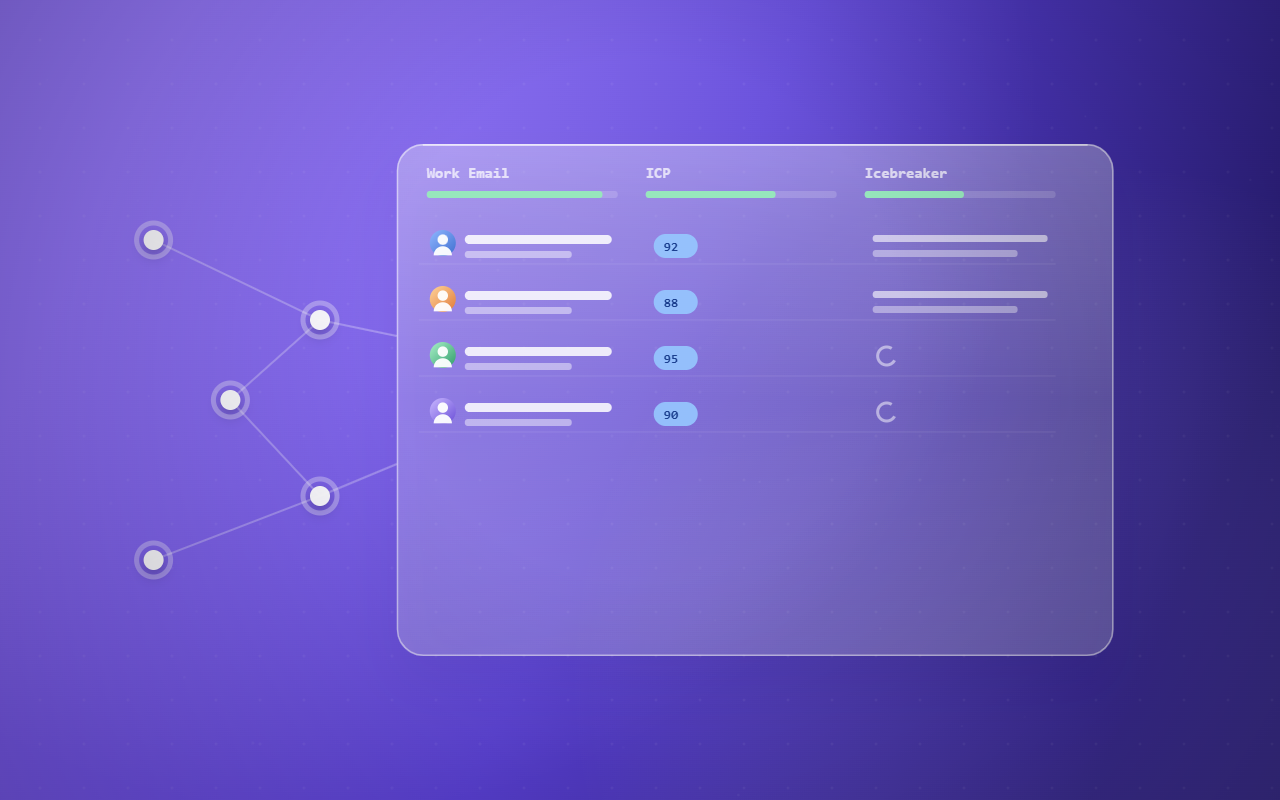
The best Seamless.ai alternatives when accuracy or contracts are the issue: Apollo or ZoomInfo for cleaner self-serve databases, a Clay workflow that verifies every address before sending, or a done-for-you service that delivers verified lists with an under-1% bounce guarantee.
Seamless.ai sells a compelling promise: a real-time search engine that finds emails and phone numbers on demand, often marketed with generous credit volumes. For reach, it delivers. The nuance is what "real-time" means in practice, some results are assembled at the moment you search rather than pre-verified, which is why two themes come up most often when teams compare alternatives: bounce rates and contract flexibility.
Here are the Seamless.ai alternatives worth knowing in 2026, grouped by what you're actually trying to replace.
Credit where it's due. Seamless.ai is fast, the real-time engine surfaces contacts for accounts that static databases sometimes miss, and the volume-friendly positioning is appealing if your motion needs a lot of records quickly. As a top-of-funnel discovery tool, it can find names other tools don't.
The question isn't "can Seamless.ai find contacts?" It's "are those contacts verified, or am I about to send to addresses that bounce?"
If you want a self-serve database with more curated, less guess-driven data:
These can improve data quality over a real-time engine. What they don't fix on their own is verification, you still want to verify before you send.
This is the category that addresses Seamless.ai's real weakness head-on. The problem isn't finding an address, it's trusting it. A workflow finds and verifies.
The trade-off is that Clay is credit-based and you have to build the workflow (or have a partner build it). In exchange, bounce stops being a surprise, because verification is a step, not an afterthought.
The honest take: a real-time engine optimizes for "found an address." Outbound lives or dies on "the address is real." Multi-source enrichment plus verification is how you turn the first into the second.
The third option isn't a tool. If you don't want to manage credits, fight a contract, or build a verification workflow, a done-for-you service delivers the result, ICP-matched, enriched, double-verified leads, billed monthly with no lock-in.
That's our lane, and it's built around the exact thing Seamless.ai users complain about. We run multi-source enrichment and double verification, and deliver lists with buying signals and personalization angles attached, with an under-1% bounce guarantee, from $300/mo. The data is verified before it reaches you, not generated as you search.
The teams that win outbound don't chase the biggest real-time database. They treat verification as non-negotiable, find contacts from multiple sources, prove the address is real, then send. The value was never the number of records found, it's how few of them bounce.
Want verified data with an under-1% bounce guarantee instead of real-time guesses? Book a 30-minute call or see the Clay lead generation service. Or grab free sample lists by industry to start.