Building an email waterfall in Clay that actually finds the address
Read
"Should we use Clay or Apollo?" is one of the most common questions we hear, and it's slightly the wrong question. Apollo is a database. Clay is a workflow engine. They solve different parts of the same problem, and the best outbound teams understand exactly where each one fits.
Here's an honest breakdown, from a team that builds in Clay every day but still uses Apollo as one source among many.
Apollo is a large, self-serve contact database with a built-in sequencer. For a founder sending their first campaigns, it's genuinely useful: you can search, filter, export and start emailing in an afternoon. The data is broad, the UI is approachable, and it's cheap to start.
The limitation is that you get Apollo's data, Apollo's coverage, and Apollo's freshness, nothing more. Everyone else querying the same filters pulls the same contacts, and the records are only as current as the last refresh.
Clay isn't a database you query, it's a canvas where you chain many data sources, enrichment providers and verification tools into one workflow. Apollo can be one of those sources. So can a dozen others. (Weighing Clay against other workflow tools? See our honest take on Clay alternatives.)
Apollo answers "who's in the database?" Clay answers "who matches my exact ICP, enriched and verified, from every source at once?"
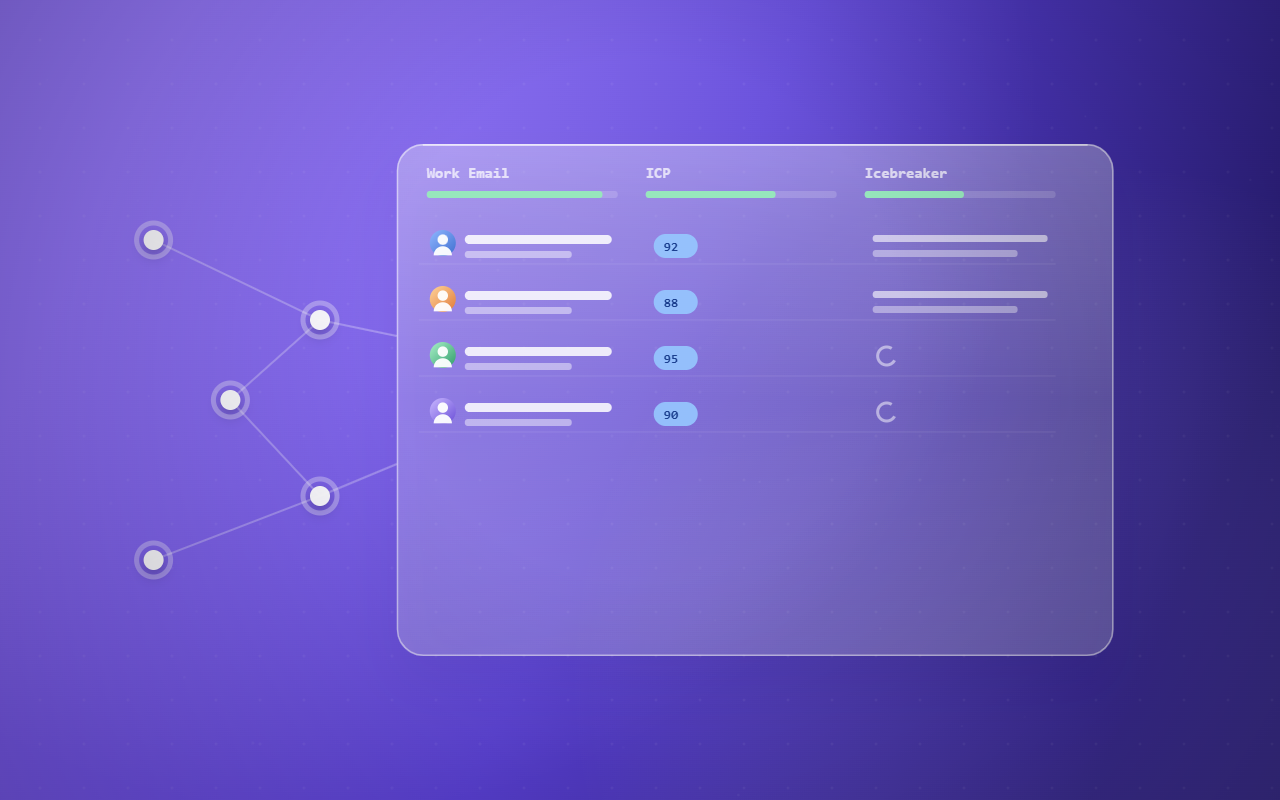
That difference compounds. With Clay you can run a waterfall across multiple email providers to push coverage past 80%, layer in technographics and funding signals, score each record against your ICP, and double-verify before anything is delivered, all in one automated flow.
The honest take: use Apollo to get started. Move to a Clay workflow the moment data quality, coverage or bounce rate starts costing you pipeline.
If you're testing your first offer and need contacts today, Apollo is a fine starting point. If outbound is a core channel and a static export is producing bounces, duplicates and "who is this?" replies, the workflow layer is what fixes it, and that's Clay.
The teams that win outbound aren't loyal to a single tool. They use the database for what it's good at and the workflow engine for everything else. The value was never the data, it's what you do with it.
Want ICP-matched leads built with Clay instead of a static export? Book a 30-minute call or see the Clay lead generation service.